
Pantry Swaps: Real Ingredients for Real Food
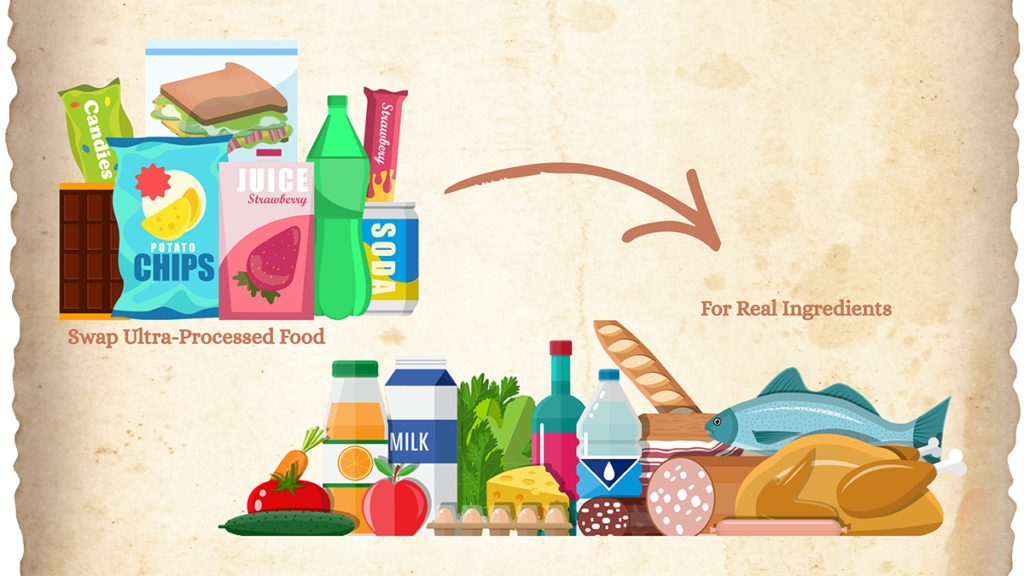
At Eat Real Again, we believe in using ingredients as close to their natural state as possible. Here’s our guide to stocking a whole foods pantry and the simple swaps we use in all our recipes.
The Eat Real Again Pantry Philosophy
Shop the perimeter of the grocery store where fresh foods live. When you do venture into the center aisles, choose ingredients with short, recognizable ingredient lists.
If your great-grandmother wouldn’t recognize it, skip it.
Flour Swaps
| Instead Of | Use | Why |
|---|---|---|
| All-purpose white flour | Whole wheat flour | Contains the entire grain – bran, germ, and endosperm – with fiber, B vitamins, and minerals intact |
| All-purpose (for lighter baking) | White whole wheat flour or Whole wheat pastry flour | Same nutrition as regular whole wheat but lighter texture and milder flavor |
| All-purpose (for pizza/bread) | 50/50 blend of whole wheat + white whole wheat | Best texture for yeasted doughs while keeping nutritional benefits |
Baking tip: Whole wheat flour absorbs more liquid. If your batter seems dry, add a splash more milk or liquid.
Sweetener Swaps
| Instead Of | Use | Conversion | Why |
|---|---|---|---|
| White sugar | Honey | 3/4 cup honey per 1 cup sugar (reduce other liquids by 3 tbsp) | Contains trace enzymes, antioxidants, and has a lower glycemic impact |
| White sugar | Maple syrup | 3/4 cup maple per 1 cup sugar (reduce other liquids by 3 tbsp) | Contains minerals like manganese and zinc; less processed |
| White sugar | Coconut sugar | 1:1 ratio | Lower glycemic index; retains some nutrients from coconut palm |
| Brown sugar | Coconut sugar | 1:1 ratio | Similar caramel notes without the refined sugar |
| Powdered sugar (frostings) | Honey or maple-based frostings | See recipes | Avoid ultra-processed powdered sugar entirely |
Our preference hierarchy:
- Honey (local when possible)
- Maple syrup (pure, Grade A)
- Coconut sugar
- Molasses (for specific recipes)
Oil Swaps
| Instead Of | Use | Why |
|---|---|---|
| Vegetable oil | Avocado oil (high heat) | High smoke point, neutral flavor, heart-healthy monounsaturated fats |
| Vegetable oil | Olive oil (medium heat) | Rich in antioxidants and anti-inflammatory compounds |
| Vegetable oil (baking) | Melted coconut oil or avocado oil | Cleaner processing, no chemical extraction |
| Canola oil | Avocado oil or olive oil | Avoid highly processed seed oils |
Cooking tip: Save your good extra-virgin olive oil for finishing dishes and dressings. Use regular olive oil or avocado oil for cooking.
Other Key Swaps
| Instead Of | Use | Why |
|---|---|---|
| Table salt | Sea salt or Kosher salt | Less processed, may contain trace minerals |
| Iodized salt | Sea salt + seaweed occasionally | Natural iodine sources |
| Store-bought broth | Homemade bone broth | No additives, rich in collagen and minerals |
| Canned beans | Dried beans (soaked & cooked) | No BPA liners, no added sodium, better texture |
| Sour cream | Plain Greek yogurt | Higher protein, similar tang |
Pantry Staples We Always Stock
Flours & Grains
- Whole wheat flour
- White whole wheat flour (for lighter baking)
- Oats (old-fashioned, not instant)
- Brown rice
- Quinoa
Sweeteners
- Raw honey (local when possible)
- Pure maple syrup
- Coconut sugar
- Blackstrap molasses
Oils & Fats
- Extra virgin olive oil
- Avocado oil
- Butter (grass-fed when possible)
- Coconut oil
Pantry Basics
- Sea salt
- Whole spices (we grind fresh)
- Apple cider vinegar
- Dried beans & lentils
- Canned tomatoes (look for BPA-free)
- Nut butters (ingredients: nuts, salt)
A Note on Balance
We’re not perfectionists. If a recipe works dramatically better with a small amount of a more refined ingredient, we’ll note it. The goal isn’t purity—it’s progress toward eating more real food.
The 80/20 rule: If 80% of what you eat comes from whole, unprocessed ingredients, you’re doing great.
Make It From Scratch
Many store-bought condiments contain hidden sugars and additives. We’ve included recipes for:
- Mayonnaise (with avocado oil)
- Ketchup (honey-sweetened)
- Mustard
- Salad dressings
- Barbecue sauce
- And more!
Check our Condiments & Sauces section to make your own.